

Hola amig@s fintech,
TikTok already has your attention. Apparently, that wasn’t enough. The company just applied for two fintech licenses in Brazil, one to issue electronic money, one to lend.
Bold? Maybe. But not surprising. Distribution first, credit second. That’s how platforms turn users into revenue. This week's edition shows exactly how it's playing out across the region.
In our Read of the Week, Simon-Kucher’s research shows neobanks are no longer challengers, capturing 40%+ of new account openings across several markets. Our Post of the Week points to the next battlefield: payroll. Whoever captures your salary becomes your primary bank. And our Stat of the Week shows how the rails are already in place: in Mexico, paytechs went from nearly nothing to 79% of POS terminals, turning payment devices into entry points for credit and formal financial lives.
The incumbents had decades to build the system. The challengers built the rails in less than one. Now, they’re coming for the most valuable part: credit. And one of the most downloaded apps in the world wants in.
Here’s this and more from across the region this week.
~Vivi
The fintech conversation continues in our community chats.
Across WhatsApp and Telegram, thousands of founders, operators, investors, and builders connect daily to share insights, opportunities, and market intel.
| Read of the Week

Neobanks are no longer niche challengers. Simon-Kucher’s global research Neobanking beyond disruption, examines how this shift is reshaping retail-banking economics. According to the report, Latin America leads neobank growth globally. Neobanks now lead new customer acquisition, capturing 40%+ of new account openings in several Latin American markets. The focus is shifting to revenue per customer, as players consolidate their position across Colombia, Peru, Argentina, and Chile. Brazil stands out, where neobank accounts now roughly match the adult population, while Mexico is emerging as one of the fastest-growing markets globally.
| Stat of the Week

For decades, small merchants in Mexico relied almost entirely on cash. That has changed fast. The chart shows the rise of digital payments since 2013. By 2017, non-bank terminals had already surpassed banks. Today, they account for 79% of the total, with over 5.1 million devices in the market. Beyond convenience, each POS device acts as a bridge from the informal to the formal economy. As transaction histories build, access to credit follows. Mexican banks had decades to digitize payments. Paytechs did it in less than one.
Source: Latinometrics
| Post of the Week

In this post, David Conde Sayans explains how neobanks are moving from being secondary accounts to competing for a more strategic role: becoming the destination for users’ salaries. He describes how players first entered through strong user experience and intuitive interfaces, zero fees, then gradually built trust and expanded their role in users’ financial lives. Now, he argues, the real battle is for payroll, since capturing it turns a neobank into the customer’s primary bank and unlocks long-term value.
| Podcast of the Week
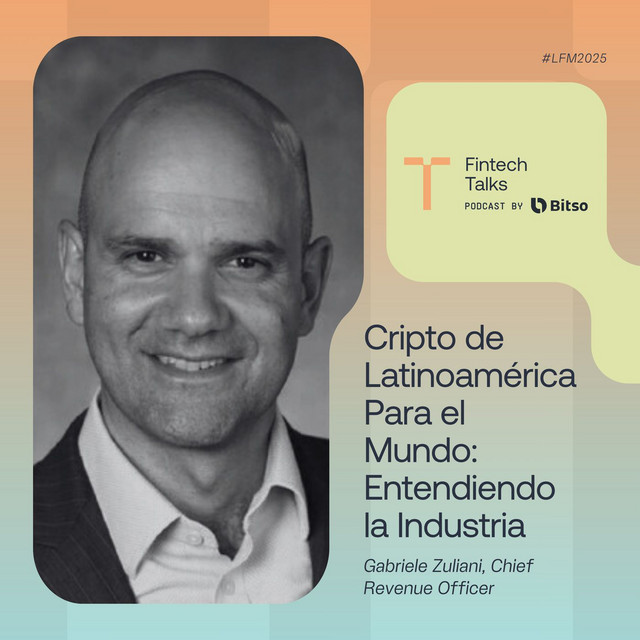
In this episode of FintechTalks by Colombia Fintech, Gabriele Zuliani, Chief Revenue Officer at Bitso, discusses how blockchain and stablecoins are reshaping cross-border payments in Latin America. The conversation explores why companies are adopting these rails, what problems they solve, and what still needs to happen for broader adoption in the region.
| Venture Financing
💵 Debt
🇲🇽 Aplazo, the Mexican installment payments platform, secured a $50 million credit line from BBVA Spark to expand its lending capacity.
🇧🇷 CashGO, the Brazilian financial platform focused on real estate companies, raised $24 million via a FIDC (Credit Rights Investment Fund) structure backed by institutional investors including Augme Capital, Arx Investimentos, and RBR Asset Management, which invest in receivables tied to its credit operations.
📺 Sponsored Content
Want to sponsor a newsletter? See our sponsorship information here or reach out to [email protected].
Want to sponsor an event with the TWIF LatAm community?
Check out the FAQ here, send us your info via this form or reach out to [email protected]
| Exits
🤝 M&A - Fintech
🇲🇽 Koltin, the Mexican insurtech offering health insurance memberships and preventive healthcare services, announced the acquisition of Last Mile Care, a company specializing in at-home clinical care services, to expand its healthcare model beyond insurance and deliver medical services directly to patients’ homes.
🇨🇱 Haulmer, the Chilean company providing digital financial tools for SMEs, announced the acquisition of Apanio, the Chilean all-in-one e-commerce platform for micro and small businesses, to strengthen its integrated ecosystem of financial and operational tools.
| Product Launches & Partnerships
🏦 Financial Services & Banking
🇲🇽 BanCoppel has partnered with global payment provider BPC to implement the SmartVista platform. The move supports faster onboarding and real-time issuance as the bank scales its credit card offering.
💻 Fintech
🇨🇴 Glim, the payroll and employee benefits platform, launched a Mastercard-backed benefits card in Colombia, allowing employers to allocate part of employee compensation into categories like food and mobility.
| Policy
🇧🇷 TikTok, owned by ByteDance, applied for two fintech licenses in Brazil: one to operate as an electronic money issuer, offering prepaid accounts and payments within the app, and another as a direct credit company to provide lending.
🇲🇽 Mexico’s Comisión Nacional Bancaria y de Valores (CNBV) authorized Ares Fintech to operate as an IFPE (electronic payment funds institution) under Mexico’s fintech law. The approval allows the company to offer regulated digital payment services within the country.
🇧🇷 The Central Bank of Brazil denied an operating license to Ecomovi Instituição de Pagamento, preventing it from offering regulated payment services. The decision, follows a history of consumer complaints against the company, including issues with refunds and misleading advertising.
🇧🇷 Qesh, the core banking platform, requested the cancellation of its license from the Banco Central do Brasil. The move reflects a voluntary exit from its regulated status, following a 2024 security breach that compromised over 53,000 Pix keys.
Why subscribe to This Week in Fintech?
• Join other execs from Visa, Plaid, Stripe, Robinhood, Revolut, Chime, Rapyd, and more to get the latest insights and deep dives.
• Learn from and collaborate with the world's largest fintech community, with 225,000+ members. • Memberships start at $10 per month.
| Other News
💳Industry/Market
🇧🇷 Mercado Pago announced the discontinuation of its proprietary cryptocurrency, Mercado Coin, marking a strategic pivot from its loyalty-token model toward the expansion of its U.S. dollar-pegged stablecoin, Meli Dolar.
🇺🇾 dLocal, the Uruguayan cross-border payments company, became the official global sponsor of the Uruguay national football team. The move strengthens its brand visibility as it ties its identity to one of the country’s most recognized institutions.
🇪🇸 Coinscrap Finance, the Spain-based company providing AI-driven tools for financial institutions, announced expansion to Latin America, targeting Mexico, Colombia, and Peru, as it scales its solutions across the region.
🇲🇽 Cregis, the digital asset infrastructure provider, is expanding in Latin America with a focus on Mexico, citing growing demand for custody and compliance solutions from companies operating with digital assets.
🔄Leadership changes

🌎Nu, appointed Diego Piacentini, to its board of Directors as the company advances its global expansion and evaluates a potential U.S. banking launch.
🇲🇽 Banco Plata, the Mexican neobank, named Marcos Kantt as Chief Financial Officer, as it prepares for a new phase of expansion and a potential IPO.
🌎PayJoy, the consumer financing platform, recruited Iván Canales as Chief Revenue Officer, as part of its next phase of global growth.
🌎Akua, the Brazilian cloud-native payments company, appointed Alexandre Magnani, as a strategic advisor to support its regional expansion.
| Deeper Reads
This piece argues that while Latin America has made major progress in expanding access to financial accounts, real inclusion still hinges on credit. Despite 70% of adults now having an account, usage remains shallow and access to affordable credit is highly uneven, especially for low-income, informal, and rural populations. It highlights how structural barriers like informality and concentrated banking markets continue to limit lending. While fintech has expanded access, it still represents a small share of total credit and has yet to scale meaningfully in core lending. The article points to credit guarantees, alternative data, and layered financial infrastructure as key to delivering real digital inclusion.
This piece explores how the rapid growth of instant and cross-border payments in the Americas is also increasing operational risks, from system failures to fraud and compliance gaps. It argues that as infrastructure becomes more complex and interconnected, managing risk is no longer just a back-office function but a core part of payments strategy. The article highlights the role of data, real-time monitoring, and stronger coordination between financial institutions and regulators, warning that without better risk frameworks, the expansion of digital payments could expose critical vulnerabilities in the system.
Made in LatAm with 🩵by
Elena, Head of New Technologies at Afirme Financial Group
Carlos, ESG Analyst at CFECapital
Vivi, Communication expert and Principal at Areté Consulting
Feedback? Reach out to us anytime! This week it’s Elena on read, post, and podcast of the week, funding, exists, other news and deeper reads, Carlos on policy, and product launches and partnerships, and Vivi on editing.
👍👎 Did you like this edition of TWIF LatAm? Take a 1-minute anonymous survey here.
Come meet us in person at www.thisweekinfintech.com/events. You can also join our global community on Twitter, LinkedIn, and Instagram.

